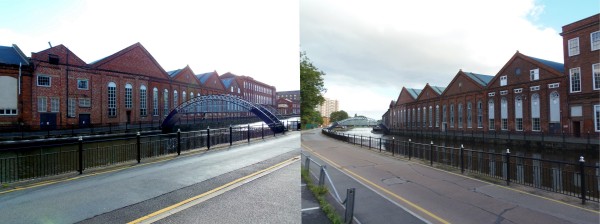
Duckering & Co. Ltd. stands as a proud symbol of Lincoln’s industrial heritage, representing over a century of innovation, craftsmanship, and resilience. From humble beginnings to engineering breakthroughs, the company’s story is woven into the fabric of the city’s economic and cultural development.
Origins of a Lincoln Iron Foundry

The journey began in 1845, when Richard Duckering partnered with Edward Burton to establish Burton and Duckering, an iron and brass foundry specialising in agricultural implements and kitchen ranges. Despite a devastating fire in 1847 at Waterside South, Duckering rebuilt and expanded the business, showcasing products like plough castings, fencing, and brass machinery components by 1856.
Growth and Generational Leadership
 |
| Charles Duckering 1841-1916 |
After Richard’s death, his son Charles Duckering took the reins, renaming the company and relocating operations to Waterside North—a site now occupied by the YMCA and a car park. Under Charles’s leadership, the foundry flourished, diversifying its offerings and becoming a fixture in Lincoln’s industrial scene. He retired in 1912, passing the business to his grandson, also named Richard Duckering.

Expansion into Locomotive Engineering
In 1920, the company became Duckering & Co. Ltd., a limited liability company with ambitions for growth. A major milestone came in 1930, when it acquired locomotive engineering drawings from Clayton Wagons, marking a bold expansion beyond traditional ironfounding.
Innovation and Retail Presence
While iron founding remained central, Duckering & Co. embraced innovation with products like corn grinding machines. In 1907, the company opened a hardware showroom on Monks Road, bringing its craftsmanship directly to the public.
End of an Era, Legacy Lives On
The company closed in 1964, ending a remarkable chapter in Lincoln’s industrial story. Yet its legacy endures—drain grates, manhole covers, and lampposts bearing the Duckering name still dot the city, silent witnesses to a bygone era.
Why Duckering & Co. Ltd. Still Matters
Duckering & Co. Ltd. wasn’t just a business—it was a symbol of adaptation, craftsmanship, and community impact. Its contributions to Lincoln’s industrial development continue to inspire, reminding us of the power of resilience and innovation.